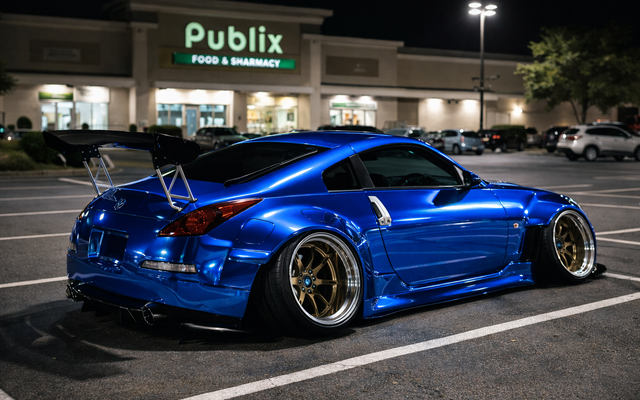
Inside the demanding realm of today's serious oversteer competition, victory is not merely purely a product of raw horsepower or driver aggression. Rather, it has evolved into a multifaceted engineering challenge that necessitates a scrupulous blend of picking a inherently capable car, outfitting it with the highest-quality competition parts, and, most importantly, grasping its real-time performance on the circuit through cutting-edge vehicle dynamics analysis tools. This comprehensive handbook functions as your roadmap starting from the very first idea of a drift build all the way to the last engineering-refined tweaks that elevate a powerful machine into a predictable podium finisher. We will thoroughly explore the precise engineering of car suspension tuning, showing how a state-of-the-art drift tuning app like GripDial eliminates approximation and offers unmatched clarity into your chassis's true dynamics.
The cornerstone of any exceptional drift machine is, without question, the platform itself. A select group of platforms have earned legendary standing within the worldwide oversteer community due to their inherent handling characteristics, strong design, and the enormous range of performance components available. Picking the correct car is the primary and most crucial choice a driver will make. For instance, the BMW's E36 3 Series is widely regarded as one of the finest all-around drift cars of all time. Its almost ideal 50/50 weight distribution, alongside a driven rear axle setup and bulletproof inline-six motors, creates a chassis that is simultaneously easy to handle for beginners and incredibly capable in the possession of a professional competitor. The successor of this lineage, the BMW E46 platform, builds upon these qualities with a increasingly sophisticated frame, wider track for improved stability, and yet a greater degree of steering angle as standard from the manufacturer. Another powerful platform in the pro arena is the Chevrolet Corvette C6.
This V8-powered sports car brings a particular combination of strengths to the sideways discipline, including a light aluminium chassis, a backwards-positioned drivetrain component that contributes to an excellent front-to-rear mass ratio, and the immense torque of a large-displacement LS-series V8 engine. This combination makes it an absolute weapon on track, able of starting and maintaining continuous drifts with relatively minimal use of power. For builders looking for outstanding bang-for-the-buck, the 350Z model Nissan stands out as a excellent choice. It arrives from the factory with a robust body structure, a competent original LSD, and the smooth V6 engine that offers ample power and torque for practicing and progressing in the activity. Its successor, the 370Z model, brings additional advancements in chassis stiffness, steering geometry, and outright engine power, solidifying its position as a popular choice among professional competitors. Other iconic cars that merit consideration are the lightweight rotary-powered Mazda FC, the most popular S13 Silvia/240SX, the American SN95 generation Mustang, the modern E90 3 Series, and the small yet incredibly playful and teachable MX-5 Miata. Each of these platforms offers a distinct palette of traits, complexities, and capabilities, but they all possess the basic components essential to become a capable sliding vehicle.
However, selecting the optimal chassis is merely the beginning. To release the full capability of any of these vehicles, significant modifications to the steering system and damping and springing systems are absolutely essential. This is where the domain of performance tuning components comes into critical focus. The most most transformative upgrade for a purpose-built drift machine is the integration of a drift-spec angle modification kit. These engineered kits, for example those developed by specialist companies like specialist manufacturers, are designed to dramatically enhance the car's possible turning lock. A standard production vehicle is extremely limited in how far its steering tires can turn, a engineering compromise for daily use. In oversteer driving, but, aggressive opposite lock is frequently required to control and maintain a drift. An modification kit replaces the OEM hubs, linkages, and sometimes suspension arms with pieces that allow the front tires to attain angles beyond 70 or even 80 °, compared to a average OEM angle of around 40 to 50 degrees.
This immensely greater steering angle provides the pilot with exponentially more command during a angle, enabling it to be far simpler to begin a oversteer moment, sustain it through a extended bend, and change smoothly from one angle to the other. The improvement in drivability is absolutely profound. Paired with a properly selected steering kit is the equally essential modification to the chassis's suspension. Off-the-shelf or even high-end street coilovers are simply not designed for the unique and extreme demands of drifting. A dedicated set of coilovers is paramount. These engineered suspension components incorporate specific valving and spring rates that are designed for the extreme mass transition that is inherent of sliding. When a driver initiates a angle, the chassis's weight is thrown rapidly to the outer of the turn. Optimal drift-spec coilovers handle this shift in a controllable way, permitting the chassis to stabilize quickly and offering the operator accurate response through the steering wheel and driver's seat. They furthermore provide accurate tuning of ground clearance, rebound and compression stiffness, and corner weighting, which are all integral elements of fine-tuning the vehicle's behavior to a given venue or driving technique. Together, a precision-engineered angle modification system and a expertly selected system of competition suspension units constitute the core mechanical base upon which all future optimization is built.
Once the core components is installed, the subsequent vital phase in the development is the detailed adjustment of the vehicle's alignment. This is the realm of chassis dynamics adjustment, a process that can appear intimidating to the uninitiated but is, in reality, the defining factor to converting a collection of high-performance pieces into a cohesive and controllable vehicle. The most discussed parameter of tuning for sliding is definitely camber angle. Camber angle is the inclination of the tire compared to the vertical line when viewed from the front of the chassis. If the top of the tire is angled inward, this is called camber-in. For drifting, an inward tilt on the steering tires is widely applied and is considered essential. The reason is deeply linked to tire contact.
When a chassis is going around a bend at limit sideways angles, the chassis leans towards the outer of the bend. This lean forces the outside steering tire to diminish its best contact patch with the tarmac. By introducing negative camber, the tire is pre-angled to compensate for this roll. As the chassis tilts into the turn, the tire flattens out on the road surface, maximizing its bite at the exact moment when it is needed most for directional command. Usually, front adjustments for a competition drift machine range from approximately -3 degrees to as high as -5 degrees or even beyond, contingent on the parameters of the car setup, rubber choice, and operator feel. The rear axle wheels also utilize negative camber, but the settings are usually more modest and more nuanced than the front axle. drift tuning app Overly aggressive camber at the rear can cause the vehicle to overly loose and challenging to manage on power application, as it reduces the effective grip area of the powered wheels during forward throttle application. Therefore, rear axle adjustments are frequently in the vicinity of -1 degree to -3 degrees, finding a delicate equilibrium between providing adequate cornering traction to help in initiating and sustaining the drift while also preserving usable traction for power-down the bend. camber angle is only one element of the broader alignment equation, which furthermore includes toe, self-centering steering, and bump steer adjustment.
Toe setting refers to the direction of the tires when looked at from a bird's-eye view. Toe-in means the front edges of the wheels are closer together than the trailing edges, while toe-out means the opposite. For sliding, a slight amount of front axle toe out is commonly employed to quicken the initial response directional response, making the car feel more nimble and ready to initiate a drift. Rear axle toe angle is typically set to neutral or a extremely minute amount of inward toe to foster straight-line stability under acceleration. Caster is the forward or rearward angle of the kingpin axis when viewed from the side-on of the vehicle. Positive caster angle improves steering feel and stability stability, and it furthermore adds to camber increase during cornering, which is highly beneficial. Tuning these parameters is a complex interaction where a adjustment to one parameter can and will affect the other settings. The conventional process for dialing in a chassis's suspension geometry for drifting has long been a tedious process of guesswork and adjustment. A pilot or team would apply a change based on a hunch, test the car on track, depend on the pilot's subjective perception and comments, and then introduce another adjustment. This loop would repeat time after time until the vehicle felt "acceptable" or the allotted track period ran out. This system is not only exceptionally wasteful in terms of time and costs, but it is additionally fundamentally imprecise.
Pilot perception is a notoriously inconsistent data source, colored by many variables such as tiredness, changing track surfaces, temperature, and merely the mood of the pilot on that specific run. What feels "oversteery" on one lap might feel "tight" on the subsequent lap, causing confusing data and frustrating changes. This traditional limitation in vehicle dynamics optimization is specifically where contemporary technology has intervened to revolutionize the process.
The development and integration of sophisticated vehicle dynamics tools has drift suspension tuning guide brought about a radically different paradigm for engineering and refining high-performance sliding vehicles. These tools, represented by innovative systems like modern telemetry hardware, work by actively recording the actual mechanical movement of the car as it is operated on the course. Unlike using personal feel, these systems collect objective information on key variables car suspension tuning such as suspension travel, corner velocities, acceleration forces, wheel angle, and accelerator and brake pedal position. This acquired information flow is then interpreted by advanced applications that can plot and analyze the metrics in a comprehensible way. For the very first time, engineers and builders can observe precisely what the vehicle is exhibiting at each point of a lap. This capability changes the entire suspension tuning procedure. Consider the aforementioned challenge of setting the front axle camber for a particular chassis. Instead of introducing a change from -3 degrees to -3.5 degrees and then testing several runs to try and "sense" a improvement, a suspension tuning tool can provide real-time and irrefutable feedback. The software can display visually how the wheel's loading is performing during the key phases of a slide: turn-in, sustain, and transition. It can demonstrate if the current angle is permitting the loaded tire to maintain ideal contact or if the rubber is working inefficiently on its outer edge.
The software can after analysis suggest empirical suggestions for adjustment. Perhaps the information indicates that the tire is even overworking its edge at -3.5 degrees of camber, indicating that even more negative camber, say -4 degrees, might be warranted. Alternatively, the data might indicate that the tire is failing to coming up to heat or that the inside edge is wearing too quickly, which could point to that there is excessive negative camber and a modest lessening back to -3.2 degrees would be more ideal. This level of precision and useful insight was completely unattainable in the era of exclusively seat-of-the-pants setup.
The effect of employing a dedicated vehicle dynamics tool reaches much further than only dialing in camber angles. It becomes an essential damper adjustment manual that is specific to your specific vehicle. When adjusting the damping clickers on your suspension, instead of using general advice or replicating another team's settings, you can use the software to see how the car is performing in response to your changes. The application can display the wheel movement trace over a lap, highlighting if the dampers are managing the weight transfer properly or if they are allowing the vehicle to bounce excessively after a transition. It can help in diagnosing issues like hitting the bump stops or losing droop, enabling you to apply informed choices to spring preload, rebound/compression rates, or stance. This methodology applies similarly to the intricate art of car alignment tuning. In addition to camber, the system can provide analysis into how adjustments to toe and caster are affecting the car's stability during various parts of a drift. For example, it can help you to ascertain the ideal amount of front axle toe-out for your individual steering setup and piloting technique by showing the response time of initial response and the predictability of the chassis at lock lock. This turns the software an incredibly effective performance optimization handbook that is dynamically informed by the real-world behavior of your personal chassis on the circuit. It shifts the complete project from a subjective skill into a scientific development process.
Furthermore, the value of a tool like modern telemetry is not at all restricted to expert tuners with vast budgets. For the club-level competitor, it serves as an incredible force multiplier. It effectively provides the tuner with the knowledge of a full-time dynamics engineer without the typical expense. It accelerates the learning curve by providing unambiguous solutions to problems that would otherwise take countless track days of experience to answer. A tuner can see how their particular vehicle responds to various settings, gaining a more profound knowledge of car control in the journey. It also democratizes high-level suspension engineering concepts, permitting all drivers with the desire to perfect their machine to accomplish it in a efficient and successful fashion. This is notably significant in a activity like drifting, where setup knowledge has traditionally been a closely guarded advantage among top drivers. Today, that capability can be in the garage of any motivated enthusiast.
In conclusion, the process to constructing and dialing in the ideal high-performance sliding vehicle is a multi-stage project that seamlessly blends classic engineering wisdom with 21st-century data technology. It starts with the informed selection of a proven platform, then enhanced by the installation of critical performance hardware like drift-spec angle modification systems and properly valved performance adjustable dampers. The process then advances into the precision phase of chassis dynamics adjustment, where values like negative camber, toe setting, and caster are precisely configured to complement the car's upgraded geometry and the operator's individual needs. Ultimately, and what really separates the contemporary methodology from the traditional methods, is the use of a powerful drift telemetry software. This system eliminates the guesswork and waste of only subjective setup by delivering quantifiable, live telemetry on how the chassis is actually behaving. It serves as an indispensable suspension tuning tool, a actionable drift suspension tuning guide, and a master vehicle dynamics tool. In unison, this holistic methodology leads to that all element of the drift machine—from the choice of the platform to the final adjustment on the suspension—is perfected for ultimate success on the competition venue. It represents the total progression of the discipline of oversteer driving, connecting physical car control with precise suspension engineering to forge the ultimate competitive cars imaginable.